Hosted by the Dante Alighieri Society of Denver – February 10, 2017 @ 7:30 PM Mt. Carmel Parish Hall – 3549 Navajo St., Denver, Colorado
Have you ever just arrived in Italy and missed out on a cool local food festival or historical reenactment? Colorado author Lisa Vogele will introduce you to a diverse collection of food & folklore festivals highlighting various regions. This presentation will interest foodies, history buffs, Italophiles and offer tips for incorporating festivals into your travel planning.
The presenter, Lisa Vogele is an Italophile, festival-lover, and travel-addict. Her blog “Lisa Loves to Travel” has been created to share her love of festivals with fellow travelers and enthusiasts. She loves hearing suggestions, recommendations, and experiences around festival travel. The “Food & Folklore” series is published by Lisa’s Travel Guides and highlights food, fun, and festivals to help others go local as a traveler, not a tourist.
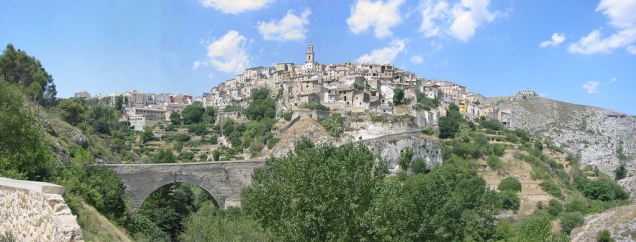
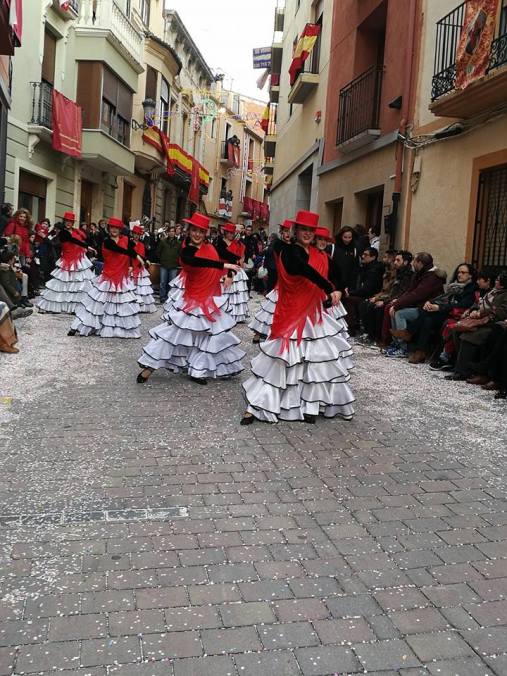
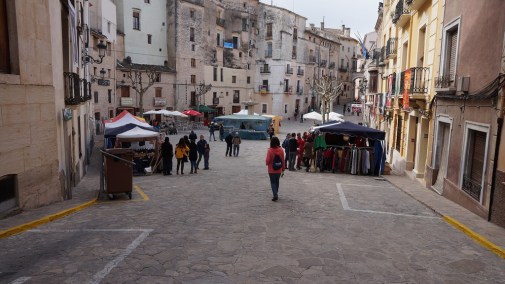
Bocairent is located in the Spanish province of Valencia. It’s five days of fiesta honoring Saint Blaise occurs annually February 1st – February 5th. Costumes, fireworks, food and folkloric dance demonstrations provide exciting entertainment. This is the town of Bocairent’s main festival day of the year and everyone turns out to line the streets and celebrate together. During the fiesta, the town’s population swells significantly with over 2,000 participants in a town of only 4,500.
Dancers in Bocairent Spain – by Amedeo Campili
The town of Bocairent has been celebrating this patron Saint of bodily ills and portraying the historic Moors and Christians characters for so long (158 years) it even has its own museum. The museum opened in 2003 and displays the typical dress for each group represented in the village. Historic festival photos and written histories line the walls and document this culturally rich event.
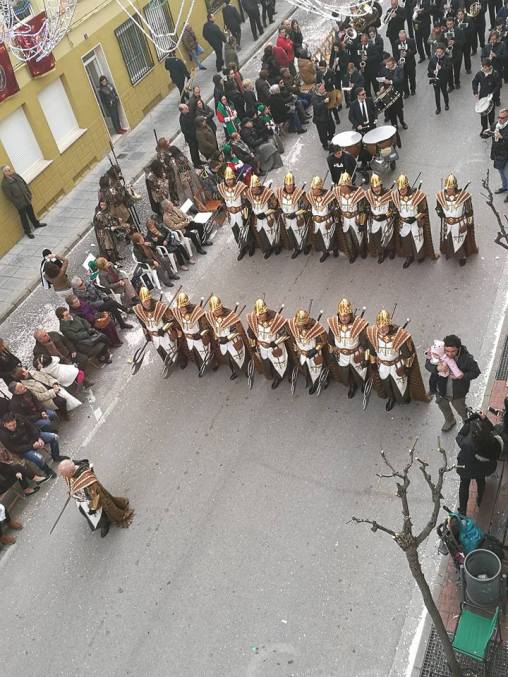
Soldiers in Moros y Cristianos Procession from Above by Amedeo Campili
Moors and Christians (Moros y Cristianos) festivals happen throughout Spain at different times of the year but are particularly numerous in the Valencia area. They commemorate the battles between the Christians and Moors during the Reconquista period in Spain (8th – 15th centuries).
Lisa M. Vogele is the author of Food & Folklore: A Year of Italian Festivals, a travel reference guide that “helps you go local” by incorporating festivals into your travel planning. The second book in her Food & Folklore Series on Festivals of Spain will hit the shelves in 2017. You can find out more information about Lisa’s books, custom itineraries and small group tours at Lisa’s Travel Guides.
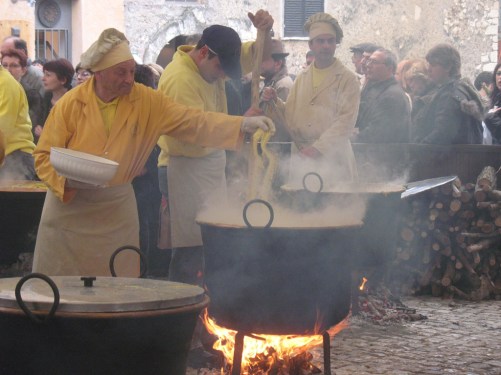
William Caetani returned to his hometown of Sermoneta in 1503 after the death of the Borgia Pope Alexander VI and exile in Mantua and America. He brought with him maize (corn) seed, beginning a long history of polenta production in Italy. If you’ve ever made polenta, you are familiar with the long, continual stirring while cooking to prevent lumps from forming. It can be eaten hot like a porridge or allowed to cool and solidify. Once solid, it can be sliced and then grilled, fried or baked.
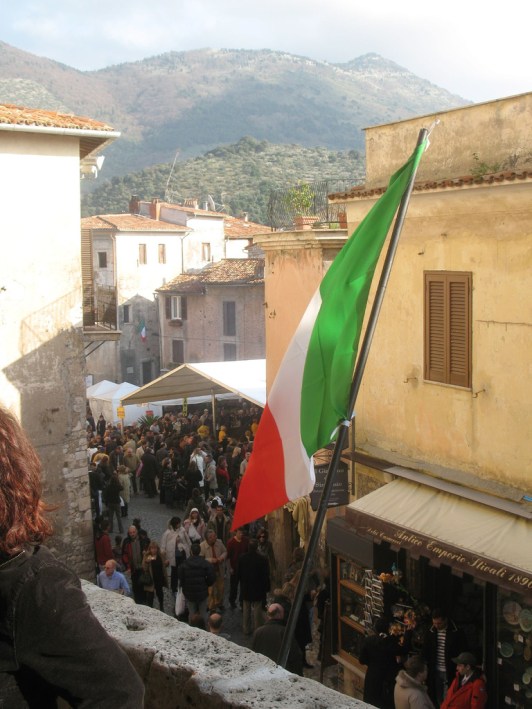
Sagra della Polenta in Sermoneta
The local Polentara are polenta professionals with years of experience (and strong arms from all that stirring!). Though there are different varieties of polenta preparation and combinations with other foods throughout Italy, here in Lazio, the two most popular are topped with a tomato-based sauce enriched with pecorino cheese and a white sauce with garlic, olive oil, sausage, chiles, and bacon.
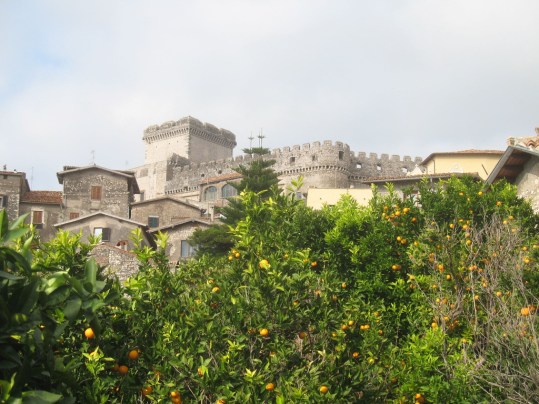
Castello Caetani in Sermoneta
Sermoneta’s annual celebration of polenta occurs on the weekend closest to Sant Antonio Abate day (January 17th). This last Sunday, the 22nd, was the big day in Sermoneta and Droganello, but the festival moves to nearby communities of Pontenuovo on the 29th of January, Sermoneta Scalo on February 5th and Tufette on February 12th.
Lisa M. Vogele is the author of Food & Folklore: A Year of Italian Festivals, a travel reference guide that “helps you go local” by incorporating festivals into your travel planning. You can find out more information about Lisa’s books, custom itineraries and small group tours at Lisa’s Travel Guides.
January 17th marks the celebration of Saint Anthony the Abbot throughout Italy. Also known as Saint Anthony the Great, he was born in Egypt and credited with being one of the founders of Christian Monasticism. He is the patron saint of animals and infectious diseases of the skin. He is often depicted with a pig in historic paintings and live re-enactments. The celebrations include ceremonies for blessing animals, enormous feasts, and tons of history.
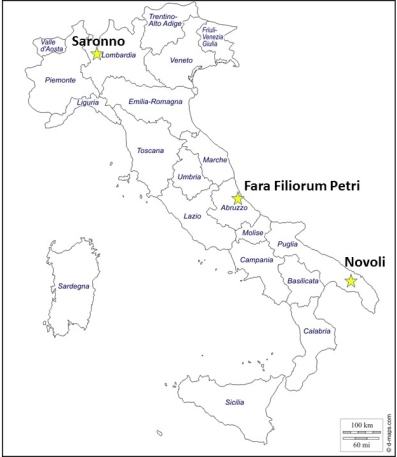
In Abruzzo, the ritual feast called panarda is still alive in towns such as Villavallelonga and consists of 30-40 dishes, takes all night, and finishes early the next morning. What is the bonfire connection? It is thought that the bonfires were lit to encourage warmth for seeds to grow with spring being just around the corner; they are lit in church piazzas, at crossroads and scattered throughout towns. Here are three celebrations representing one each from the north, central and southern parts of Italy:
Saronno Piazza and Church of Saints Peter & Paul
Saint Anthony Procession in Saronno
Saronno, Varese, Lombardia – Sant’Antonio di Saronno
If the name Saronno sounds familiar to you it may be because this is where the famed, Italian liqueur with an almond taste Amaretto di Saronno and Amaretti almond biscuits are produced. Saronno celebrates Saint Anthony two ways: with festival activities on the days leading up to the Saint’s day and a religious mass and feast on the actual Saint Anthony’s day, January 17th. The festival days include mixes of historical processions, folklore performances and typical food of the Lombardy region.
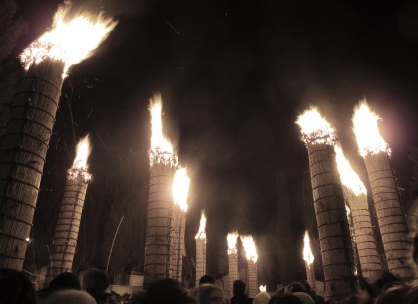
Le Farchie in Fara Filioruim Petri
Fara Filiorum Petri, Chieti, Abruzzo – Le Farchie
Fara Filiorium Petri is a long name for a small town of less than 2000 people. But on Saint Anthony’s day, their bonfire is anything but small. Fara Filiorum Petri began to prepare on the 6th of January when the bonfire materials were gathered from the fields for assembly. On the night of the 16th, the 60-foot tall columns of kindling are hoisted into place and remain there through the mass and processions on the following day until the bonfires are lit at 5:30 PM on January 22nd. The resultant effect is columns of fire lighting up the town center.
Gathering Kindling in Novoli
Gathering Kindling in Novoli 2
Novoli, Lecce, Puglia – Focara di Novoli
All the way down on the foot of the Italian peninsula, the town of Novoli celebrates their annual Focara di Novoli for almost the entire month of January. Musical activities and entertainment are spread throughout the month in different venues. At 65 feet wide and 82 feet tall, this may be one of the largest of its kind in Italy. The lighting of the Focara is followed by fireworks displays lighting up the night sky.
The Building of La Focara in Novoli
The Lighting of La Focara in Novoli
FESTIVAL TRAVEL TIPS
There are many more celebrations for Saint Anthony the Abbot throughout Italy. To locate one, search on “Sant’Antonio Abate” and the name of the Italian town, city or region and you can find a celebration to incorporate into your itinerary. Celebrations for this day often begin several days in advance.
Lisa M. Vogele is the author of Food & Folklore: A Year of Italian Festivals, a travel reference guide that “helps you go local” by incorporating festivals into your travel planning. You can find out more information about Lisa’s books, custom itineraries and small group tours at Lisa’s Travel Guides.
Sicily is undoubtedly known for its fabulous pastry sweets. Sfincia, also called Spincia, are sweet, donut-like pastry treats served around festivals and holidays but in particular, for festivities honoring San Giuseppe. The sfinica are made by combining basic ingredients of flour, eggs, butter, salt, and water. There are slight variations of this recipe, but all are shaped into elliptical balls of dough, then deep fried golden brown. The Sfince are served several ways at the feast: sprinkled with sugar or filled with ricotta, cottage cheese or cream.
Chiesa di Montelepre
Montelepre Street Scene
Church in Montelepre
The town of Montelepre has been celebrating the Sagra della Sfincia for over 15 years. Montelepre is located on the outskirts of Palermo, trailing down a mountainside. It’s home to 6,000 residents and has a long history dating back to 1400. The Sagra della Sfincia in Montelepre usually takes place on January 6th but was postponed until January 8th this year due to bad weather. The festivities are centered around Piazza Principe di Piemonte from 3:00 PM – 10:00 PM. If you find yourself in Sicily at another time of year, visit Pasticerria in Palermo to give these sweet treats a try.
Lisa M. Vogele is the author of Food & Folklore: A Year of Italian Festivals, a travel reference guide that “helps you go local” by incorporating festivals into your travel planning. You can find out more information about Lisa’s books and “Fun with Food & Festivals” Tours at Lisa’s Travel Guides.
The smell of roasting chestnuts wafting in the air always reminds me of the holidays. Tonight, that aroma is accompanied by the smell of grilled sausage for the residents of Prossedi at their annual sausage festival. The Sagra della Zazzicchia (Festival of Sausage) began at 7:00 PM in the central Piazza Umberto, filled with dancing and music.
Sausages on the Grill
Gate of Prossedi on Piazza Umberto
Sausage contains a variety of meat and seasonings. The sausage served at Sagra della Zazzicchia includes a seasoning of chili, salt and orange peel that is mixed in and sits overnight to marinate in the seasoning before being stuffed into its sausage casing the next day. The sausage cures for up to 4 days then is grilled and served with broccoli.
Panorama of Prossedi Countryside
The Baronial Palace of Prossedi sits proud and dominant on Piazza Umberto. At one time the palace boasted a moat and a drawbridge. It has passed through the hands of several families and continues to be privately owned. Prossedi was founded in the 7th century by refugees from neighbor Priverno. It sits on a hill overlooking the Amaseno Valley, less than two hours south of Rome.
Lisa M. Vogele is the author of Food & Folklore: A Year of Italian Festivals, a travel reference guide that “helps you go local” by incorporating festivals into your travel planning. You can find out more information about Lisa’s books and “Fun with Food & Festivals” Tours at Lisa’s Travel Guides.
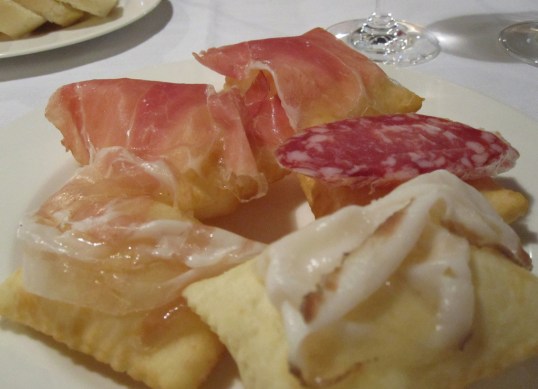
“Gnoccho, Salame e Fantasia” is a savory food feast dedicated to the gastronomic delight of salame on gnocco fritto (batter fried into a cracker). Rubiera hosts this food event as part of their December-long calendar of holiday events. When you see the word Gnocco your mind may travel immediately to gnocchi, the potato filled pasta. However, what we are talking about here is Gnocco Fritto, a crispy, fried dough in the shape of a cracker or pillow served as an appetizer with meats or lard. It has different names with slight recipe variations throughout the region: Gnoccho Fritto in Rubiera, Pinzino in Ferrara, and Chisolino near Piacenza. Flour, bacon fat or oil, milk, water, yeast and salt are mixed together to form a dough that rises over time. It is then rolled into a sheet, cut into triangles and rectangles and boiled in lard. The results are small pillows or crispy, cake-like crackers.
Rubiera Porticos
Rubiera Street
Rubiera is a town set in the countryside of the Emilia province of Emilia-Romagna with beautiful, portico-lined streets. Its original name was Corte de Herberia translated as “in the middle of the plain” in Celtic. Located along the ancient Via Emilia, it is about 30 miles northwest of the University city of Bologna. The Via Emilia is an ancient Roman trade route running from Piacenza to Rimini on the Adriatic Coast, where in ancient times, it connected to the Via Flaminia route to Rome.
Gnocco Fritto, Salame & Wine
Gnoccho Fritto, Salame & Olive Oil
Rubiera can easily be reached by car off of the A1 motorway that runs between Parma and Bologna off the Modena Nord exit. Consider visiting some nearby balsamic vinegar producers or visiting the Ferrari Museum in Maranello.
Lisa M. Vogele is the author of Food & Folklore: A Year of Italian Festivals, a travel reference guide that “helps you go local” by incorporating festivals into your travel planning. You can find out more information about Lisa’s books and “Fun with Food & Festivals” Tours at Lisa’s Travel Guides.
It’s beginning to look a lot like Christmas in the Marche region of Italy this weekend. The Italian medieval village of Candelara in Pesaro is bathed in candlelight 8 nights each November & December. “Candele a Candelara” (Candles to Candelara) is an Italian Christmas Market devoted to Candles. At 5:30 PM and 6:30 PM, all of the electric lights are turned off in the town and it is basked in the warm glow of candles for 15 minutes. 70 wooden houses line the streets and sell different, locally made goods and, of course, candles! There are candle-making demonstrations, jugglers, violinists and other live entertainment. Each year, their own Santa Claus band, made up of 35 musicians in Santa Claus costumes, leads a procession through the streets in honor of Santa Lucia (Santa Claus is Babbo Natale in Italian). Several restaurants also serve dinners by candlelight, to continue the festivities inside.
Candelara Montage
Candelara Montage
Candelara Montage
Candelara in Pesaro is only about 10 km from the Adriatic Coastline, in the northernmost part of the Marche region. It is an area of rolling hills that transition into the coastline and known for its terrific beaches. Candelara has several interesting churches and a castle dating back to 400 AD. If you are interested in learning more about Candelara in depth, Il Ponticello, a local tour company is offering a walking tour that begins and ends at the candle market celebrations, includes local highlights and even a wine tasting stop (see Il Ponticello below) for 15 Euro.
Street in Candelara
Santo Stefano in Candelara
“Candele a Candalara” takes place over eight days straddling the last weekend of November, and the first two weekends of December. The market is open from 10AM – 9PM on the following dates in 2016: NOV 26 & 27, DEC 3, 4, 8, 9, 10 & 11. Admission is 2.50 Euros for ages 13 and over (12 and under enter free).
Lisa M. Vogele is the author of Food & Folklore: A Year of Italian Festivals, a travel reference guide that “helps you go local” by incorporating festivals into your travel planning. You can find out more information about Lisa’s books and “Fun with Food & Festivals” Tours at Lisa’s Travel Guides.
I am excited to announce that I will speaking at the New York Times Travel Showon January 28, 2017, at the Jacob K. Javits Center in New York City!
This show is the “largest consumer travel and trade show in North America” with an estimated 30,000 attendees expected. Visit the show if you are trying to decide on your next vacation destination, love food & cultural demonstrations or simply want to come hear me share my love of combining festivals and travel.
CAN’T MAKE IT TO NEW YORK? CHECK OUT MY ONLINE SALE & SIGNING
I am having an online book signing and sale for the rest of 2016 – makes a great stocking stuffer, holiday gift or hostess gift! Click here to buy nowdirect from me.
TRAVEL WITH LISA!
My 2017 & 2018 Tour dates are available here. Look for detailed itinerary announcements in the next several weeks. If you would like to receive an email of my tour brochure, send me a note: lisa@lisastravelguides.com.
ABOUT
Lisa M. Vogele is the author of Food & Folklore: A Year of Italian Festivals, a travel reference guide that “helps you go local” by incorporating festivals into your travel planning. You can find out more information about Lisa’s books and “Fun with Food & Festivals” Tours at Lisa’s Travel Guides.
Leonardo DaVinci’s Map of Imola Created for Cesare Borgia
Imola should be on your itinerary if you want an “off the beaten tourist track” location in the Emilia-Romagna region with good food and historical sites. Il Baccanal of Imola is a series of events within an event held throughout the month of November. Its name pays homage to Bacchus, the Roman name for the Greek god Dionysus for the grape harvest and wine. Each year there is a theme that runs through the exhibitions, wine tastings, olive oil tastings, cooking school, restaurant specials, and entertainment. This year the theme is “chicchi, grani e farine” (beans, grains, and flour). There is some type of eating, market or activity offered most days in November. This weekend the local olive oil is the focus; open from 9am – 7pm there is a local olive oil market with olive oil tastings and products.
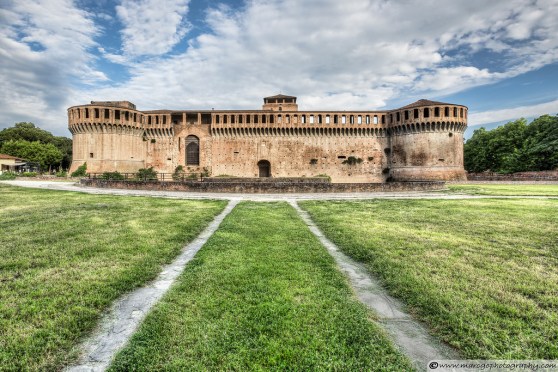
Rocca Sforzesca – Sforza Castle
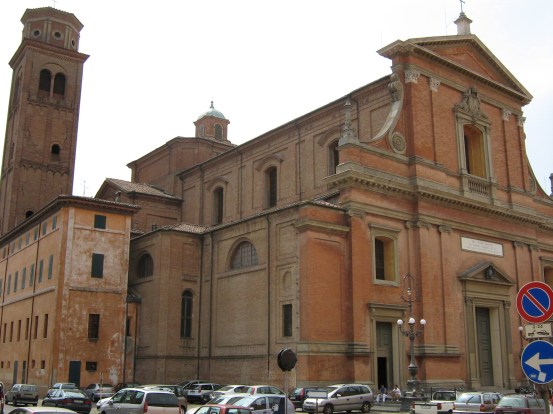
Unless you are a Formula One or motorcycle racing fan, you may not have heard of Imola. Like many locations in Italy, Imola sits on the remains of an old Roman town. The duomo of Imola was originally erected in the 12th century and endured various renovations. It’s current facade dates to the 1850’s and inside it has a 16th-century baptismal font and 15th-century wooden crucifix above the altar. The Rocca Sforzesca (Sforza Castle) sits right in town and dates back to 1261. It is a very fine example of medieval and renaissance fortification-type architecture. in 1480 it was expanded by Girolamo Diario and his wife, the famous Caterina Sforza. In addition to walking through the castle itself, visitors can view the ceramics and weapons museums housed here.
Duomo di Imola – Basilica Cattedrale di San Cassiano Martire
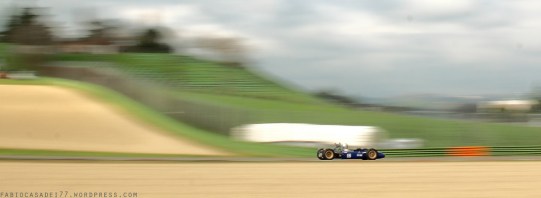
Of course, if you ARE a Formula One racing fan, a visit to the Enzo & Dino Ferrari Autodrome is a must; in fact, for all car enthusiasts, it’s possible to take a few laps around the track in a Ferrari for 800+ Euro or attend the Lamborghini Academy on site. Whether its food, castles or cars that interest you, you can’t go wrong with Imola.
On the Track at Imola: The Autodromo Enzo & Dino Ferrari
Lisa M. Vogele is the author of Food & Folklore: A Year of Italian Festivals, a travel reference guide that “helps you go local” by incorporating festivals into your travel planning. You can find out more information about Lisa’s books and “Fun with Food & Festivals” Tours at Lisa’s Travel Guides.






 ABOUT
ABOUT







 I am excited to announce that I will speaking at the
  CAN’T MAKE IT TO NEW YORK? CHECK OUT MY ONLINE SALE & SIGNING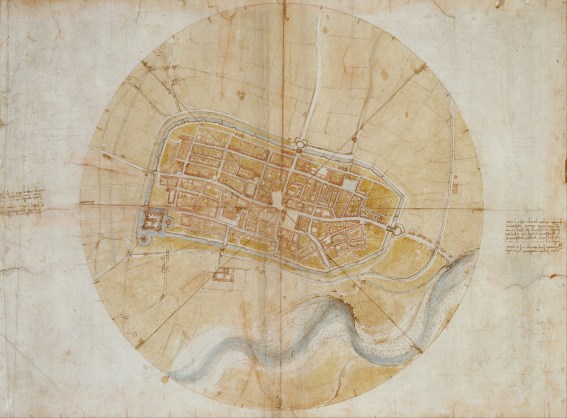
 lisa loves to travel
