Last year I attended the July Palio in Siena. Steeped in tradition and excitement it was an unforgettable experience! This year’s race is tomorrow Sunday, July 2, 2017. Enjoy my experiences from last year and this excerpt from my book Food and Folklore: A Year of Italian Festivals (currently available through my website http://www.lisastravelguides.com, your local bookshop or on Amazon.com). The Palio is the culmination of a series of historical activities over a 4 day period filled with much more pageantry and history-in-the-making than can be covered in a simple blog post. Enjoy! @paliodisiena #palio @EnjoySiena #Tuscany #Siena
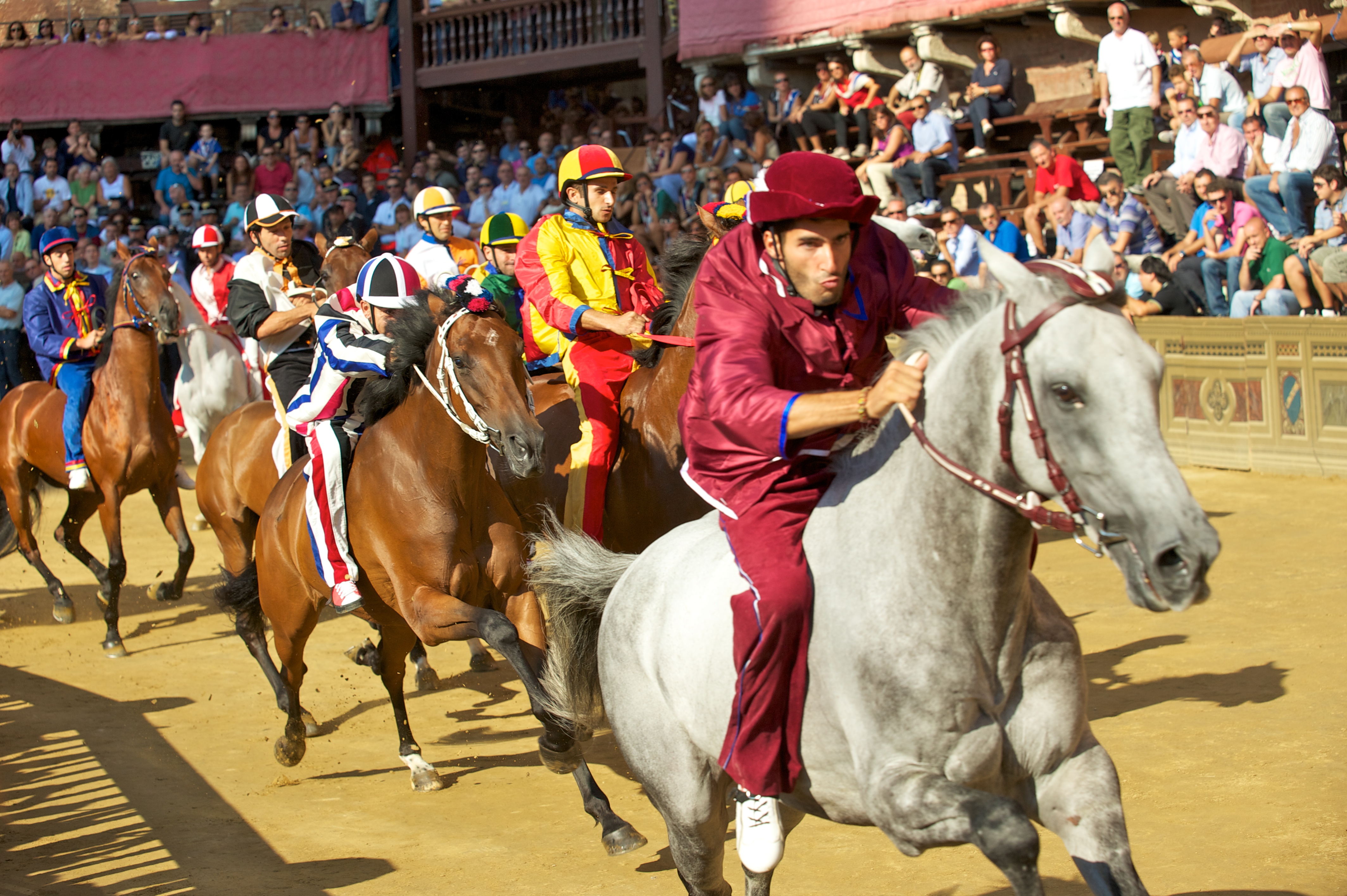
While many folkloric traditions continue as a draw for both tradition and tourism, the Palio of Siena is by the Senese for the Senese. The Palio is held twice each year, on July 2 and August 16, but on the minds of every resident each day of the year. There are seventeen contrade (districts) and each is a community within a community of extended family with its own leaders, headquarters, flags, colors, museums, churches, patron saints, allies and sworn enemies. The seventeen contrade are named Caterpiller, Conch Shell, Dragon, Elephant, Forest, Giraffe, Noble Goose, Leopard, Owl, Panther, Porcupine, Ram, She Wolf, Snail, Tortoise, Tower, Unicorn and Wave.
![IMG_0564[1]](https://lisalovestotravel.com/wp-content/uploads/2016/07/img_05641.jpg?w=2448&h=3264)
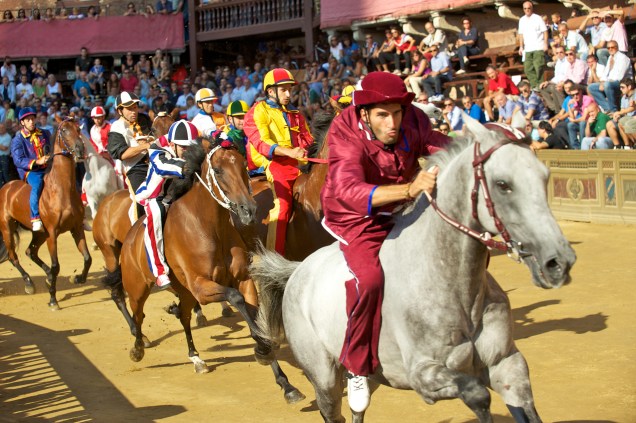
Each contrada fields a fantino (jockey) and a horse for the race. Since space is limited and the course dangerous, only ten horses and fantini run each race. The contrade selected to run will always be the seven that did not race the previous Palio and three additional selected through a lottery. They race to win the Palio, the unique, silken banner created for each race. (Note: contrade is the plural for contrada in Italian)
![IMG_0526[1].JPG](https://lisalovestotravel.com/wp-content/uploads/2016/07/img_05261.jpg?w=3264&h=2448)
One month before each race the lots are drawn for which contrade will race. The week before the race, soil is brought in from the countryside to lay the dirt track over the cobblestones around Piazza del Campo. The main festivities start three days before each Palio when the horses for each contrada are selected; it is not until then that the contrade and fantinos know which horse their jockey will ride. The process looks a lot like bingo and kicks off the next part of the Palio precursor, strategy.
After it is known which horse each fantino will ride, the representatives for the contrada begin negotiating with each other. Horses and their jockeys are guarded by several members of the contrada to avoid foul play and contact with other contrade. Participating contrade will even go as far as paying another contrada to defeat its sworn enemy; some will try to bribe the jockeys. The days that follow include trial runs in the piazza, drummers, and flag bearers practicing and parading in the streets. The night before, hundreds of people sit at tables that seem to stretch on for miles in each contrada for dinner. Everyone is wearing their colors and passionately shouting the fight songs of their contrada.
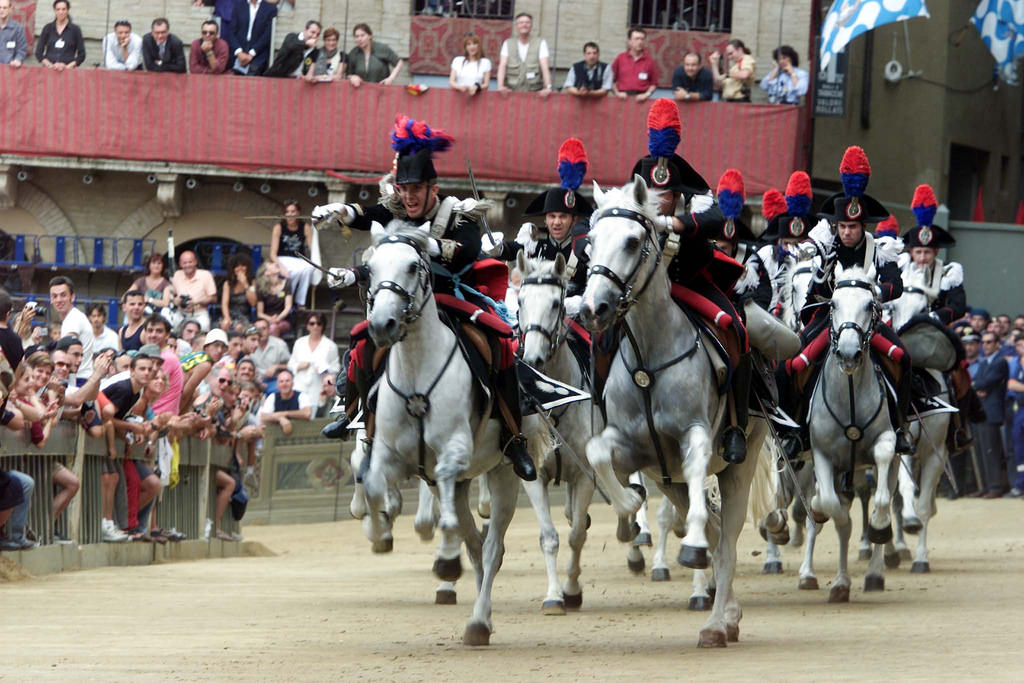
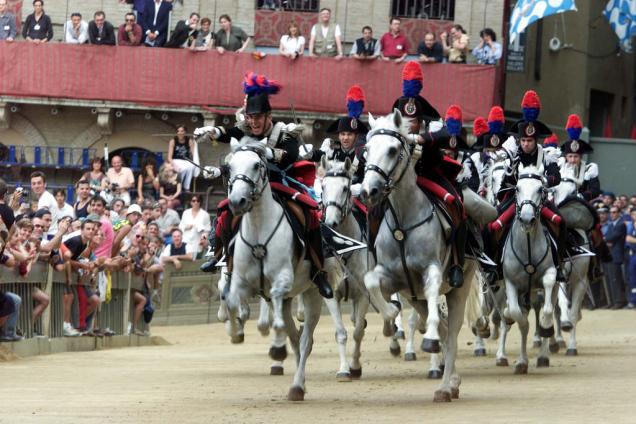
On the day of the race, each horse is taken into the church of its respective contrada, sprinkled with holy water and blessed. About mid-afternoon a procession lasting several hours winds its way through the city and into Piazza del Campo. About 60,000 people are in the Campo waiting for the horse race to begin. The starting lineup is selected, they lineup at the starting line and once there are no false starts, they race to the finish whipping each other and their horses in an effort to gain position. The jockeys ride bareback through the dangerous course, which lasts about ninety seconds. It’s the only horserace in the world where the horse wins the race, whether the rider is still on it or not. In the end, everyone celebrates except the team that comes in second, they turn out their lights and become the quietest corner of the city.
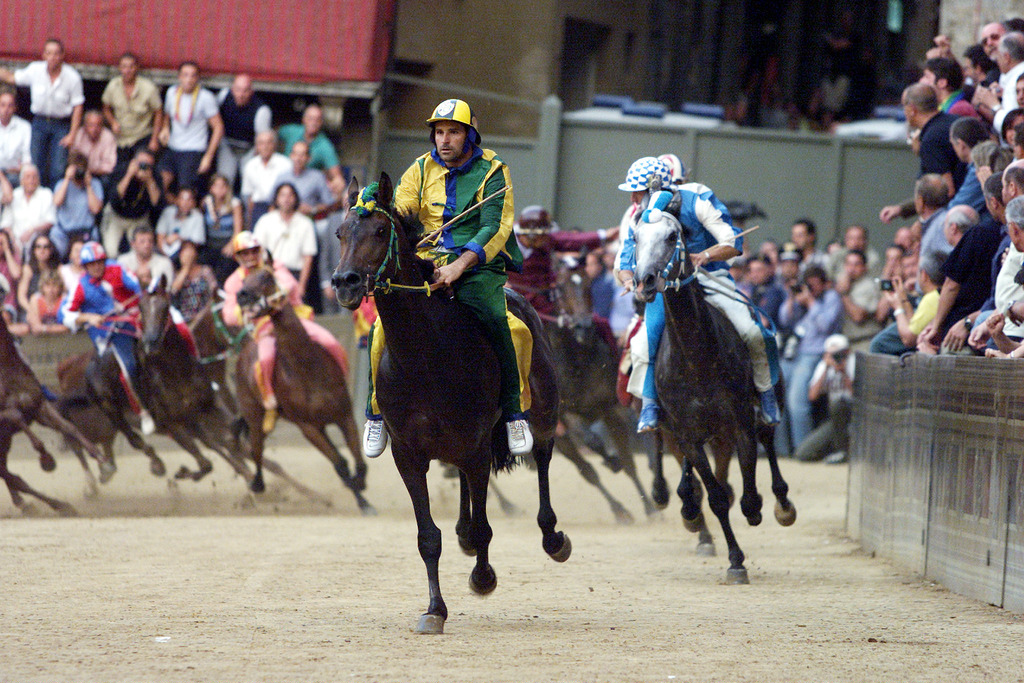
The August race is the most important but no less anxiety-ridden than the July one and just as exciting for anyone lucky enough to attend. Tickets can be hard to come by so plan well in advance or arrive very early to claim a spot inside the interior (where there are no facilities provided). If you arrive in Italy prior to the July Palio, you should also look into attending Calcio Storico Fiorentino in Florence held about eight days prior.
If you are interested in streaming the Palio live, this is a link to Siena TV (cell phone signals appear to be blocked during the events in Piazza del Campo). The race is scheduled to start at 7:20 PM local time (London 6:20 PM, 1:20 PM in New York, 12:20 PM in Chicago, 11:20 AM in Denver & 10:20 AM in Los Angeles). The start time is sometimes delayed due to the heat, the historical processions and the time it takes to line up the horses (quite difficult with no stalls). Siena TV linkSiena TV link
IN THE KNOW
- if you are seriously thinking about attending NEXT year in July or August, reserve a room or apartment ASAP if you want to stay within Siena and/or consider a package through an event operator
- Ask your host about tickets (the inner circle is free, but seats in stands or in the windows of private homes must be reserved)
- If you decide to watch from the inner circle, get there four hours ahead to stake your claim (about 3 PM)
- There are no facilities provided at the free inside ring of Piazza del Campo; plan ahead for bathrooms, water and sunscreen since you will be there for several hours
FOUR DAY SCHEDULE OF THE PALIO Italian* English
FURTHER READING & VIEWING
Feature Length Documentary: PALIO (2015)
Palio History: PALIO by John Hunt (several books available on the history of the event and the contrade)
Historical Fiction: The Shepherdess of Siena by Linda Lafferty
ABOUT
Lisa M. Vogele is the author of Food & Folklore: A Year of Italian Festivals, a travel reference guide that “helps you go local” by incorporating festivals into your travel planning. You can find out more information at Lisa’s Travel Guides
PHOTO CREDITS
Palio Horses & Fantinos: Janus Kinase via Foter.com / CC BY-SA
Palio Horses in Action g.sighele via Foter.com / CC BY
Carrabinieri Charging on Horseback g.sighele via Scandinavian / CC BY
All other photos by Lisa M. Vogele
* use google translate, websters.com or another translation assistance site
 Spring has already sprung in Agrigento, Sicily. Originally founded as a Greek colony in 581 BC and called Akragas, Agrigento has been, at various times, ruled by Byzantines, Romans and Arabs. The Greek presence is perhaps most felt at the Valle dei Tempi, home to five temple ruins that draw visitors from around the globe.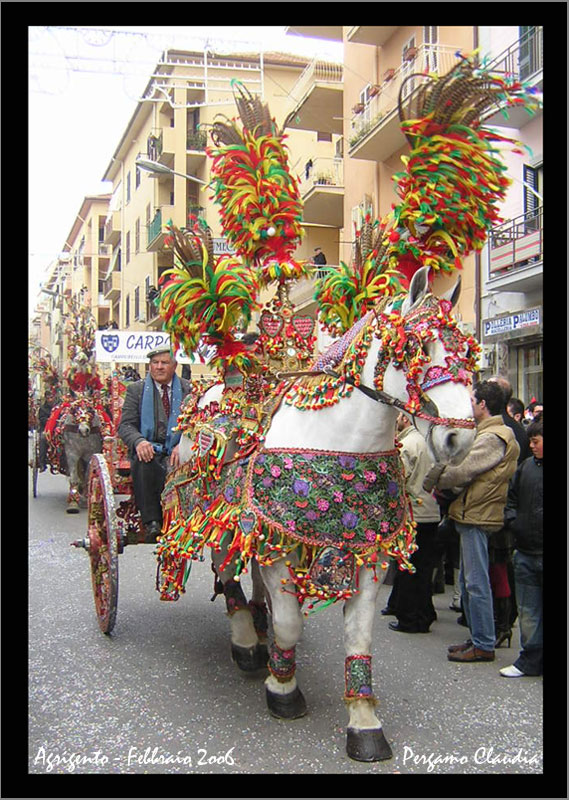




![IMG_0564[1]](https://lisalovestotravel.com/wp-content/uploads/2016/07/img_05641.jpg?w=636)
![IMG_0526[1].JPG](https://lisalovestotravel.com/wp-content/uploads/2016/07/img_05261.jpg?w=636)
![IMG_0528[1]](https://i0.wp.com/lisalovestotravel.com/wp-content/uploads/2016/07/img_05281.jpg?w=208&h=208&crop=1&ssl=1 "IMG_0528[1]")

![IMG_0532[1]](https://i0.wp.com/lisalovestotravel.com/wp-content/uploads/2016/07/img_05321.jpg?w=208&h=208&crop=1&ssl=1 "IMG_0532[1]")


![IMG_0583[1]](https://i0.wp.com/lisalovestotravel.com/wp-content/uploads/2016/07/img_05831.jpg?w=208&h=208&crop=1&ssl=1 "IMG_0583[1]")


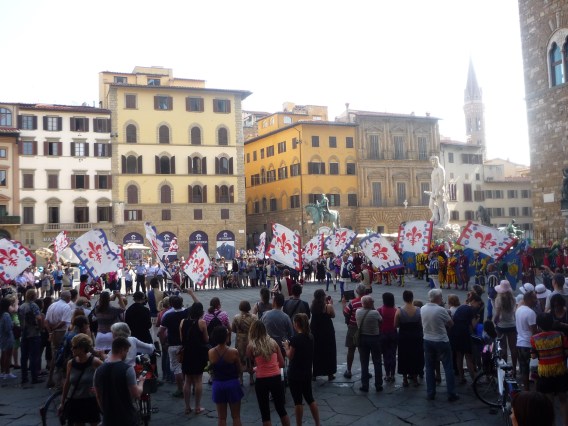
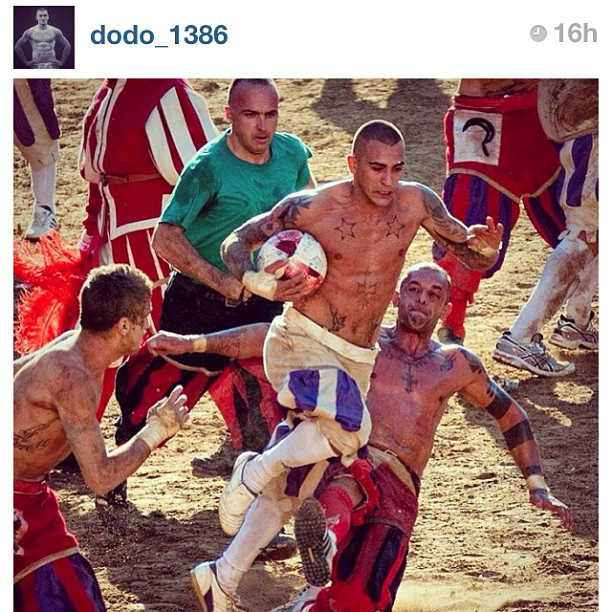 Originating in the 16th century, it was once the sport of rich nobles who played every night between Epiphany and Lent. Official rules were drafted and recorded in a Florentine court in 1580 by Giovanni de’ Bardi. Team members from four quartiere (neighborhood) in Florence take this quite seriously. The neighborhoods and their colors are:
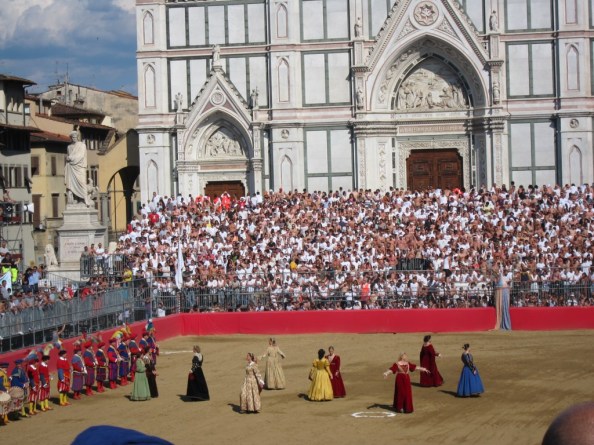 Twenty seven players on each team are half-clad in historical uniforms for the occasion. Each neighborhood is allowed to recruit players from outside the neighborhood and even outside of Italy. There are two semifinals played two weeks before the final on June 24th of each year, which coincides with St. John the Baptist day. Who plays who in the semifinals is decided Easter weekend when colored balls are drawn to determine the semi-final match ups. This year’s final (tonight) features the blues (azzurri) against the whites (bianchi). Tickets sold out in 10 minutes flat!
 Hands and feet can be used, anything goes except sucker punches and ganging up on your opponent; strictly one on one combat – and if you are kicked out – no replacements are allowed, your team plays short of members. A goal (caccia) is scored by hurling the ball over the netting at each end of the sand playing field through a narrow opening guarded by 4 goal tenders. At the end of 50 minutes, the most goals wins! What does the winning team get for their blood, guts and glory? A palio (banner) and a free dinner; in the past it was a Chianina cow. There is no monetary compensation for the winners, only bragging rights for a year. The festivities will conclude this evening at 10 pm with a spectacular fireworks show over the Arno.

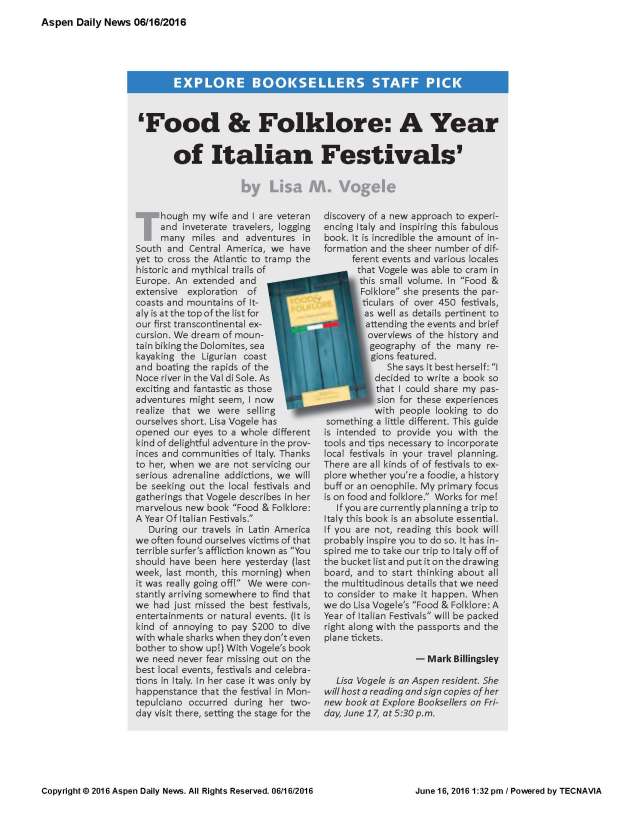


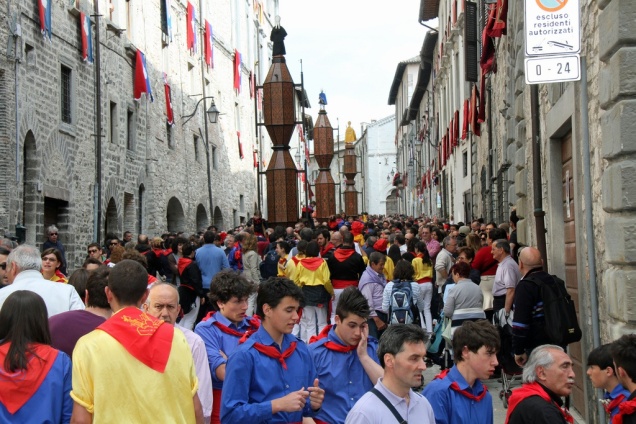
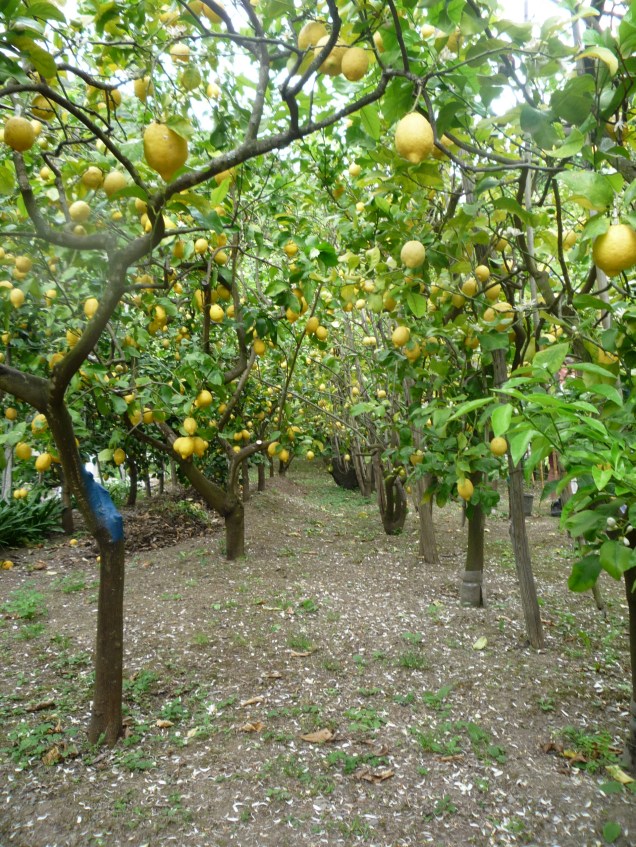 You have your pick of festivals to attend this weekend in Italy: lemons or fish on the Ligurian coast, rowing in Venice or running in Gubbio. Rather than choose between them, I decided to give you a taste of each.


 Vogalonga literally means “Long Row”. It’s a boat race from Piazza San Marco to Burano and back (20 miles/32 km roundtrip). Hundreds of boats take part with many participants in historical costumes. It is held each May 15th and this year is its 42nd celebration.


 lisa loves to travel